Pressure gauges are important in any industry because they help measure and monitor pressure levels of a machine, system or equipment. These are available in various designs, types and sizes to meet different bends of applications and demands. Being familiar with the proper operation of a pressure gauge and understanding how to accurately read it is critical for safe and reliable operations. Read on to learn more about the top ten types, some useful tips for using them and a thorough maintenance checklist that will help you run your pressure gauge as good as new along with an extensive guide showing how to make the most out of it in order promote both longevity and efficiency.
Pressure gauges are designed to interpret changes in pressure into analog or digital measurements, providing operators with a means of receiving and controlling acceptable pressures. But, delivering accurate indications from a gauge requires knowing the design and layout of its scale range marking. C indicates a page with critical information; here is how to determine this.
"Pressure gauge type: Pressure gauges can take many forms including Bourdon tube, diaphragm, capsule and bellows models. Check the user manual for which type of gauge it is and what operating range they recommend their gauges to be used in
Check the range: Every pressure gauge is calibrated to a particular range of pressures that it measures precisely. It is critical to make sure that the pressure being measured will be within this specified range.
Read the scale: look at the face of your gauge and find where it shows, either in PSI-pounds per square inch; Bar- unit for air pressure which is kg/cm2 or kPa units. The pointer will show the current pressure level, its position scales with the values on left side of 0. Other electronic gauges have markings for reading the range (or color-coded ranges).
Possible error: Gauges are inherently imprecise and their accuracy is a function of manufacturing tolerances, environmental considerations or the wear /tear. If you own leaf gauges from a long-term perspective, we would advise validating the accuracy of your gauge occasionally with calibration standards or directly comparing it to other gauges that have been calibrated.
We listed down top 10 Pressure Gauges for Different diverse Industries:
Bourdon Tube Pressure Gauges: Among the most common types of pressure gauges used in many applications, Bourdon tube gauges operate by sensing changes in pressure using a curved metal tube that expands or retracts as an outcome.
Diaphragm Pressure Gauges- Utilized when measuring low pressure, the gauges utilize a flexible diaphragm which changes shape relative to prevailing pressure conditions.
Capsule gauges: Constructed similarly to diaphragm types, capsule units contain a pair of very thin metal disks bonded together so as they will expand or contract under pressure changes.
Bellows Gauges For pressure applications that deal with potentially corrosive or contaminated media, the bellows gauge is used as it contains a set of convoluted metal plates which extend or contract when subject to changes in pressure.
Differential Pressure Gauges: Two ports for input with a single port for output, these kinds of gauges are generally designed to measure the difference in pressure between two points.
Pressure Transducers: Pressure transducer gauges that convert pressure into an electrical signal and can be used for remote monitoring and automation application.
Powered by Powered by Vacuum Gauges: Commonly employed in quantifying negative stress/ vacuum amounts.
Digital Pressure Gauges: These gauges are known for their digital readouts that provide exact measurements, reducing the potential scope of human error in calculation and offering other use utilities like data logging and alarms.
Compound pressure gauges: A combination of a scale in itself that combines two scales on the meter and measures either positive or negative numbers.
Hermetically Sealed Gauges: Ideal for all application with dangerous media, Hermetic sealed gauges also have a hermatic seal which isolates the gauge chamber from the medium.
How to Get the Most Out of Your Pressure Gauge: 5 Useful Tips
If you want to get the best out of your pressure gauge, here are some hacks:
Find Out the Right Gauge to Use: It is based on several factors like pressure range, accuracy, operating temperature and media compatibility.
Follow the manufacturer's guidelines when installing and mounting it with suitable adapters, valves or manifolds.
Protect the gauge from external factors, such as very high or low temperatures, vibrations and shocks and humidity.
Practice safe procedures when working with pressurized systems: depressurize slowly, wear proper PPE and follow your lockout/tagout protocols.
Inspect and Clean Gauge: Routinely check for leaks, corrosion, damage or cleanliness of the gauge.
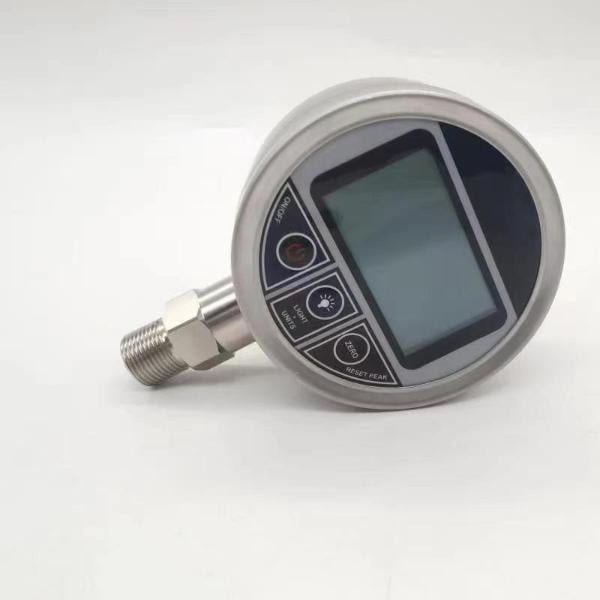
Ensure the reliability and pocket friendliness of your pressure gauge by working with this maintenance checklist:
Examine the gauge dial and pointer for damage, misalignment or corrosion.
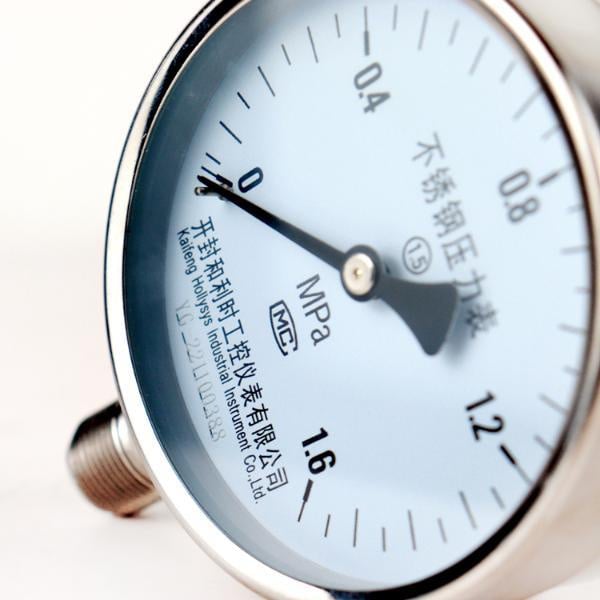 >Leakage, cracks or deformity in gauge connections and fittings" >
Check the gauge accuracy against calibration standards or comparing it to other calibrated gauges.
Using a soft cloth and mild detergent, clean the gauge face and lens.
Lubricate the threads of the gauge and adapter with an appropriate lubricant
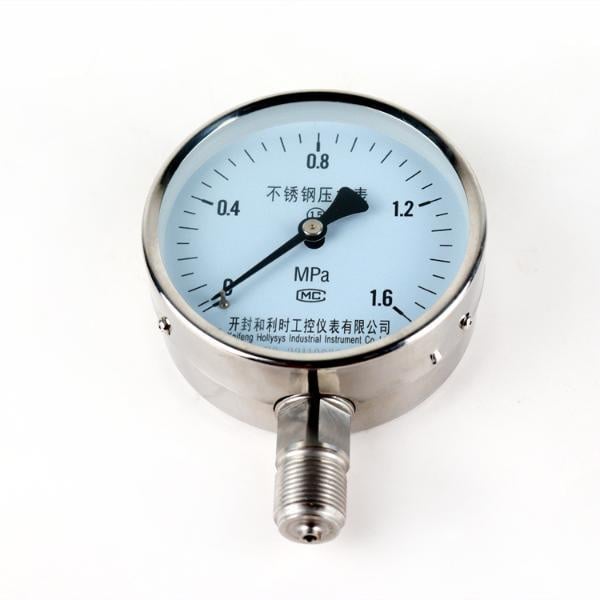
Pressure gauges are essential, measuring devices that offer critical details into the level of pressure within a variety of applications they operate. Knowing how pressure gauges function, the different types of their application in real-world scenarios allow you to decide on which type of gauge is best for a particular job and interpret readings correctly as well help maintain proper performance by having it calibrated regularly. By maintaining the relevant points mentioned above, you will be able to enjoy your Pressure Gauge for long without worrying about its failure.
We have first obtained various forms approval certificates in pressure guage and, secondly we have gotten an explosion-proof certificate that is recognized by the local mining industry (Ex d ia(ia Ga) q IIC T6 Gb) and we are trying to obtain the international ATEX explosion-proof certification; in addition production workshop in our factory has completed complete set of quality and environmental system certifications and has obtained certificates; finally we also have CE certifications; complete ISO quality certification, etc.
Our location is excellent. Within 60 kilometers, there Zhengzhou International Logistics Port, the largest air-based logistics port in Central China, with abundant options for logistics and air; there are a variety of international express companies such as FEDEX, UPS, DHL, TNT, etc. assigned to cooperate. At the same the same time, Zhengzhou City, 50 kilometers away from us is the biggest railway hub in China that has direct railway pressure guage channels that connect that connect to Central Asia, Europe and Russia. Therefore, shipping from our country is swift and secure, and there are many routes pick from.
Our company has been cooperating renowned universities in the country for several years, has been able to recruit and training top technical talent. This will not only guarantee our ongoing technological advancement, but also continuously improves and introduces new products. We can find solutions to various problems and issues that our customers encounter in their various projects. The talent plan we have developed also helps to develop professionals with pressure guage skills by providing specific research labs for and collaborating within the industry with top technology company's study.
We have a full set of precision measurement and calibrating equipment received certification from the China Institute of Metrology. This guarantees that every flow meter that we ship out of the factory is calibrated to real flow, with precise and accurate precision. I also have all the necessary waterproof and pressure testing equipment. This is to make sure that the factory I run is equipped with the capacity strength to create high-pressure instruments that are custom-designed or IP68 protection. We have a strict and complete quality control department. Every stage of the pressure guage is designed to make sure each item is in perfect condition after leaving the factory.

Copyright © Kaifeng Kamboda Industrial Instrument Co.,Ltd All Rights Reserved - Privacy Policy